
How to Brew the Perfect Cup of Loose-Leaf Tea
Simple tips for water temperature, steeping time, and finding the cup that's just right for you.
There is something wonderfully simple about brewing loose-leaf tea.
A few leaves, fresh water, and a little time are all it takes.
But if you're new to loose-leaf tea, that simplicity can come with a few questions. How much tea should you use?
Does the water need to be boiling? How long should you let the leaves steep?
And what happens if you leave them in too long?
The good news is that brewing loose-leaf tea doesn't need to be complicated. A few basic guidelines will help you make a delicious cup, and from there, you can adjust things until you discover exactly how you like your tea.
So put the kettle on. Here's how to get started..
What Do You Need to Brew Loose-Leaf Tea?
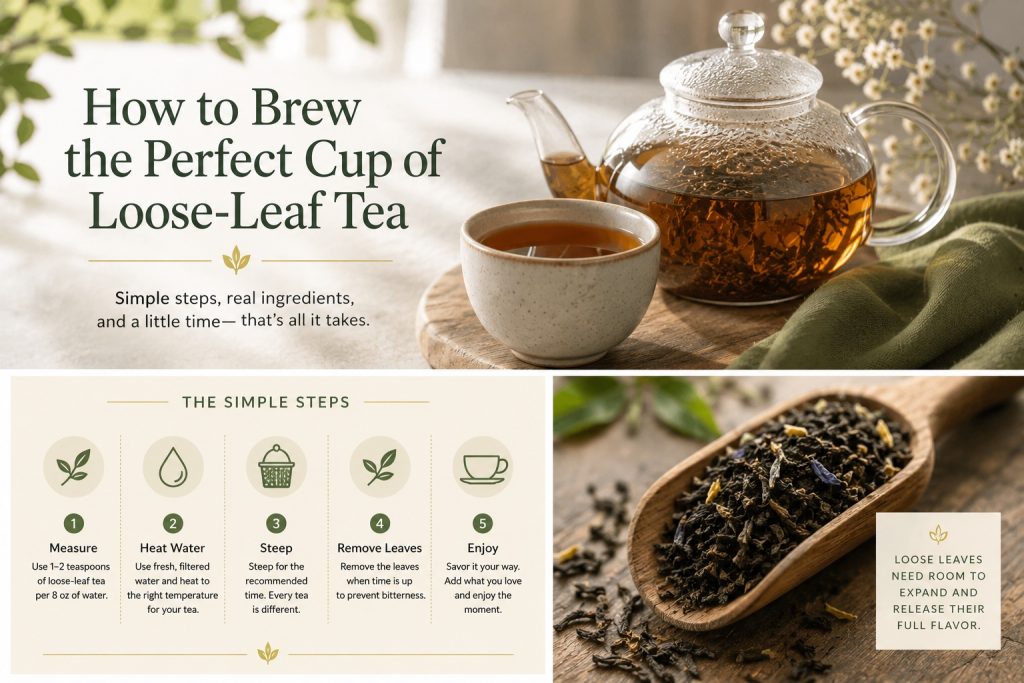
You don't need an elaborate tea setup or special equipment. At its simplest, you'll need loose-leaf tea, fresh water, a mug, and something to separate the leaves from the finished tea.
A basket-style tea infuser is one of the easiest options because it gives the leaves plenty of room to expand while they steep.
You can also use a teapot with a built-in infuser or brew the leaves freely in a teapot and strain them as you pour.
Whichever method you choose, give your tea leaves a little room.
Loose leaves expand as they absorb water, and allowing water to circulate around them helps release their flavor and aroma.
Step 1: Measure Your Loose-Leaf Tea
A good starting point is approximately 1–2 teaspoons of loose-leaf tea for every 8 ounces of water.
But think of this as a starting point rather than a rule.
Tea leaves vary tremendously in size and density.
A teaspoon of tightly rolled oolong is very different from a teaspoon filled with large, airy white tea leaves or chunky pieces of fruit.
If your first cup tastes too light, use a little more tea next time. If it's stronger than you prefer, use a little less.
Finding your favorite cup is part of the experience.
Step 2: Start With Fresh Water
Tea is mostly water, so the water you use matters. Start with filtered, cold water whenever possible.
Filtered water can be especially helpful if your tap water has a noticeable chlorine or mineral taste.
Try not to repeatedly reboil water that's been sitting in the kettle.
Starting fresh helps preserve the clean flavors and aromas you're trying to bring out of the tea.
Step 3: Choose the Right Water Temperature
One of the easiest ways to improve a cup of loose-leaf tea is to pay attention to water temperature.
Not every tea loves boiling water.
Delicate green and white teas generally prefer cooler water, while black teas and herbal or fruit infusions can usually handle much hotter temperatures.
As a general starting point:
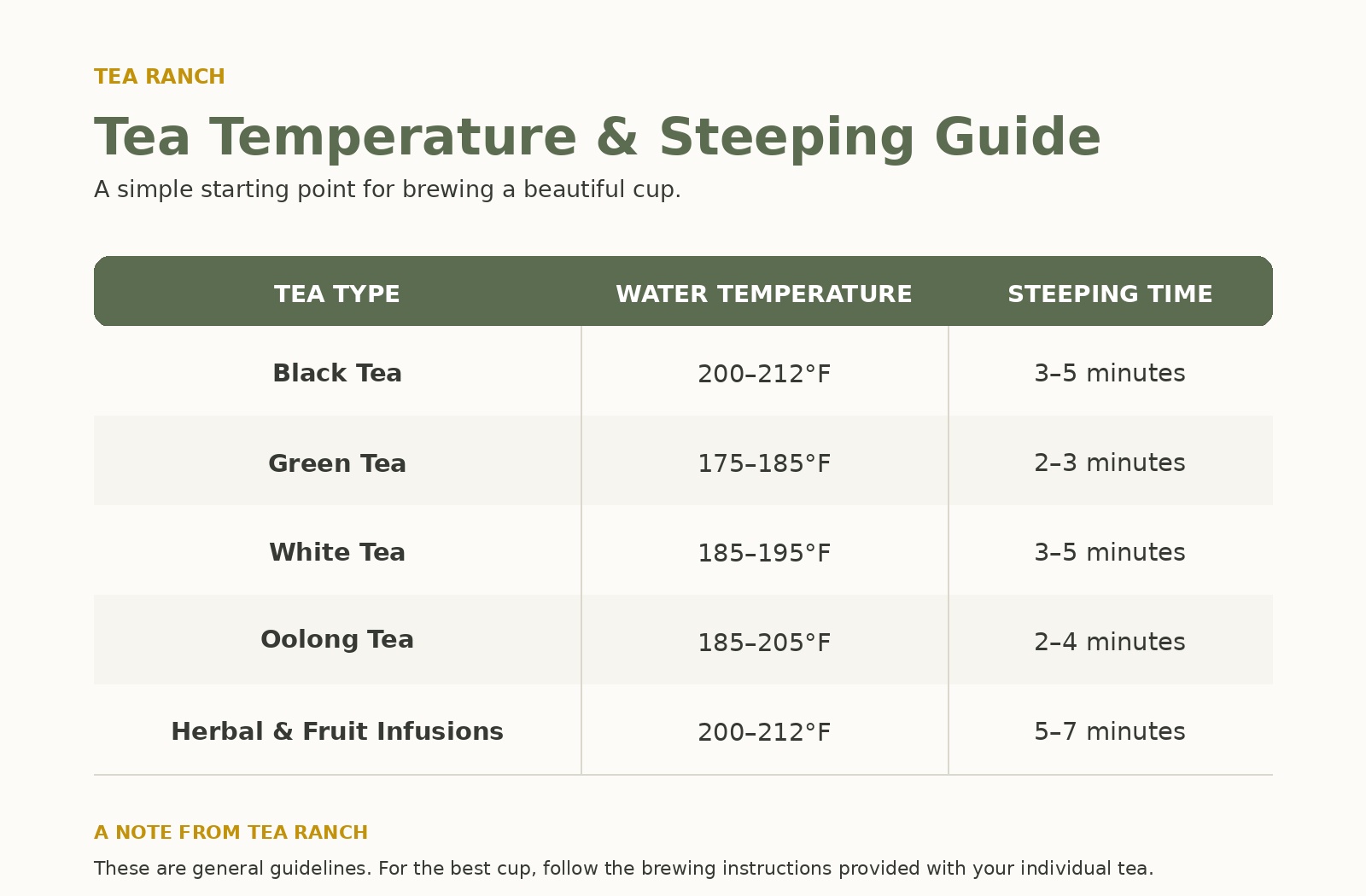
These are general guidelines rather than universal rules.
Blended teas can behave differently depending on their ingredients, so always check the brewing instructions provided with your particular tea first.
If you don't have a temperature-controlled kettle, don't worry.
You can simply bring your water to a boil and allow it to cool briefly before pouring it over more delicate teas.
Step 4: Give Your Tea Time to Steep
Once you've added the water, let the leaves do their work.
During steeping, the water draws flavor, aroma, color, and other compounds from the tea leaves and botanicals.
The temptation, especially when you want a stronger cup, is to simply steep the tea longer.
But longer isn't always better.
Over-steeping certain teas, particularly green and black teas, can draw out more tannins and result in a cup that tastes bitter or astringent.
If you want a stronger cup, try using a little more tea rather than dramatically increasing the steeping time.
A simple kitchen timer or the timer on your phone makes this surprisingly easy.
Step 5: Remove the Leaves and Make It Yours
When your tea has finished steeping, remove the infuser or strain out the leaves.
Then comes the most important part: Drink it the way you enjoy it.
Some teas are wonderful completely on their own.
Others pair beautifully with a little milk or cream, honey, sugar, or lemon.
There is no prize for drinking tea the "proper" way.
If adding a spoonful of honey makes you look forward to your afternoon cup, add the honey.
If you love a rich black tea with cream and sugar, enjoy every drop.
The best cup of tea is the one you want to drink.
Can You Steep Loose-Leaf Tea More Than Once?
Often, yes. Many high-quality loose-leaf teas—particularly oolong, green, and some white teas—can be steeped more than once.
The flavor may change subtly with each infusion, sometimes revealing notes that weren't as noticeable in the first cup.
If you'd like to experiment, simply steep the leaves again and add a little extra time to the next infusion.
Not every blended or flavored tea will be equally suited to multiple steeps, but there's no harm in trying.
You may discover that your favorite tea has more than one good cup to give.
What About Iced Loose-Leaf Tea?
Loose-leaf tea is just as enjoyable cold as it is hot.
For an easy glass of iced tea, brew your tea slightly stronger than usual, then pour it over plenty of ice.
Fruit and herbal blends can be especially refreshing this way, and you can add fresh citrus, berries, herbs, or a touch of sweetness to make the glass your own.
We'll explore different ways to make loose-leaf iced tea, including cold brewing, in a future Tea Journal post.
A Few Common Loose-Leaf Tea Mistakes
If your tea isn't tasting quite the way you expected, the solution is often surprisingly simple.
Tea tastes bitter?
Try lowering the water temperature or shortening the steeping time.
Tea tastes weak?
Use more tea rather than immediately steeping it much longer.
Tea tastes flat?
Try fresh filtered water and make sure your tea has been stored away from heat, moisture, light, and strong odors.
Tea leaves aren't opening?
Your infuser may be too small. Give the leaves more space to expand.
Small adjustments can make a surprisingly big difference.
There Is No Single "Perfect" Cup
Temperatures, measurements, and steeping times are useful because they give us a place to begin.
But tea is also personal.
Maybe you prefer your oolong a little stronger.
Perhaps you love your black tea with cream and sugar. Maybe your favorite summer drink is a fruit infusion poured over a tall glass of ice.
That's part of what makes tea so enjoyable.
At Tea Ranch, we think making tea can also be a small invitation to slow down.
While the water heats and the leaves steep, there isn't much else to do.
So give them a few minutes.
Look out the window. Step outside.
Put your phone down.
Notice what's happening around you.
Then pour your tea and enjoy it wherever you happen to be.
After all, sometimes a mindful moment really can begin with a cup.
Happy steeping,
Annika
Founder, Tea Ranch