
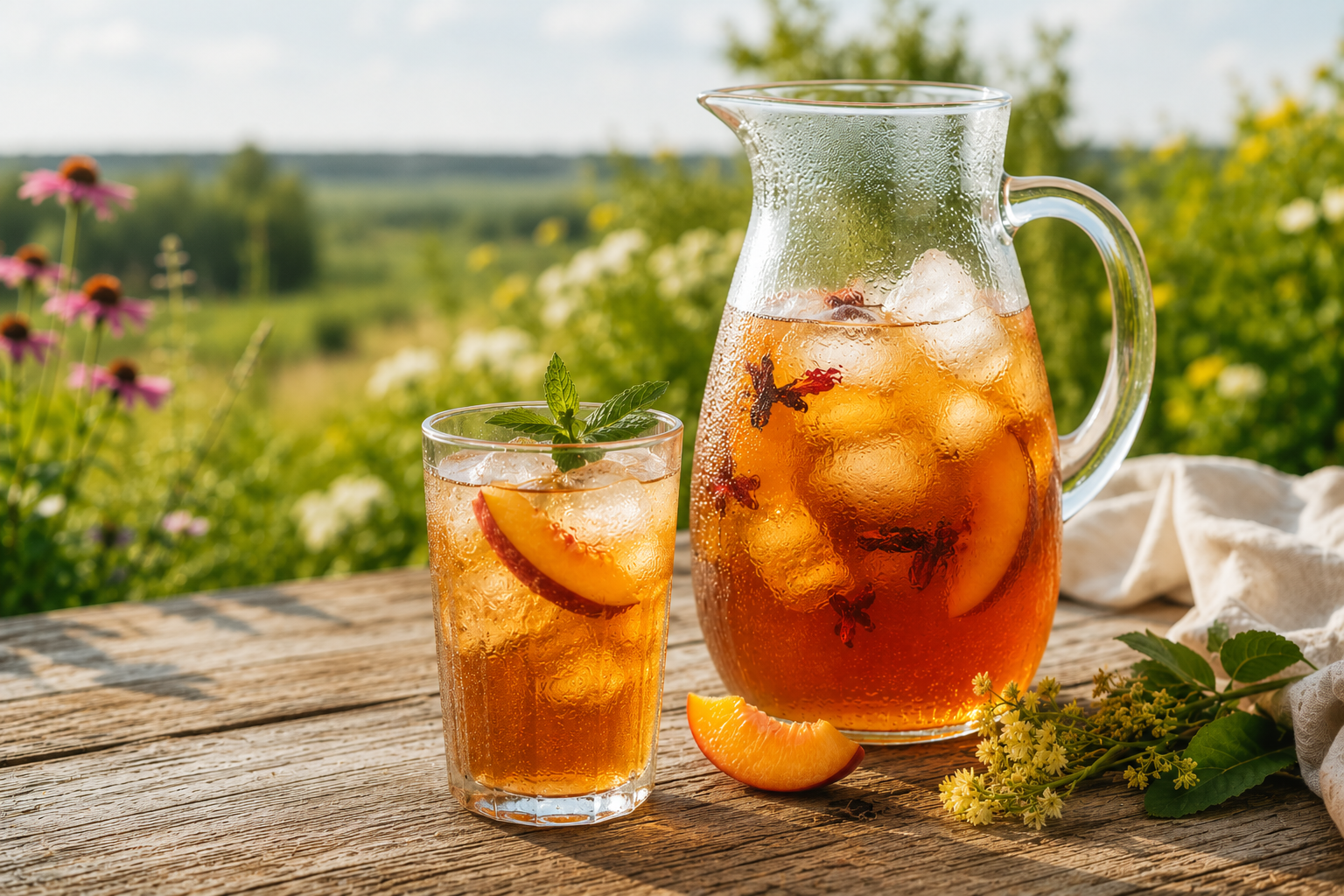
How to Make Iced Tea with Loose-Leaf Tea: A Simple Guide
Fresh, flavorful, and surprisingly easy—here’s how to turn your favorite loose-leaf tea into a refreshing glass of iced tea.
There are few things better on a warm afternoon than a tall glass of iced tea.
And if you already have loose-leaf tea in the pantry, you don't need a special iced tea blend, or any complicated equipment, to make one.
Black, green, white, oolong, herbal, and fruit teas can all be wonderful served over ice.
The trick is simply understanding that tea destined for a glass full of ice needs to be brewed a little differently from tea destined for your favorite mug.
Here’s how to do it.
Can You Make Iced Tea from Loose-Leaf Tea?
Absolutely.
Almost any tea you enjoy hot can also be served cold, although some flavors lend themselves particularly well to iced tea.
Fruity teas become especially refreshing.
Floral teas can taste beautifully delicate when chilled.
Black tea makes the classic, robust iced tea most of us know, while green and white teas create lighter alternatives.
And colorful herbal ingredients such as hibiscus and butterfly pea flower?
Those can turn an ordinary glass of iced tea into something rather spectacular.
The important thing isn't buying a tea labeled iced tea.
It's brewing the tea properly.
The Easiest Way to Make Loose-Leaf Iced Tea
There are several ways to make iced tea, but if you want a glass right now, our favorite method is simple:
Brew it hot and brew it stronger.
Why stronger?
Because you're about to pour that tea over ice.
As the ice melts, it adds water and dilutes the tea.
If you brew your usual cup and simply add a large handful of ice, the result can taste disappointingly weak.
Instead, make a concentrated brew that can stand up to the melting ice.
Quick Loose-Leaf Iced Tea Method
For one generous glass:
1. Measure your tea.
Use approximately twice the amount of loose-leaf tea you would normally use for the same amount of brewing water.
2. Heat your water.
Use the appropriate water temperature for your particular tea.
Black and herbal teas generally tolerate hotter water, while green and white teas often benefit from cooler temperatures.
3. Steep normally.
Don't compensate for iced tea by dramatically increasing the steeping time.
Oversteeping can introduce bitterness or astringency, particularly with true teas.
Instead, use more tea leaves rather than much more time.
4. Strain.
Remove the leaves or infuser once the tea has finished steeping.
5. Pour over plenty of ice.
Fill a heat-safe glass with ice and pour the concentrated tea over it.
Give it a stir, let it chill, and you're ready to drink.
More Tea, Not More Time
This is probably the most useful tip in the entire article.
If you want stronger iced tea:
Increase the amount of tea rather than simply steeping it longer.
It's tempting to leave the leaves in the water for twice as long, but that doesn't necessarily create twice as much good flavor.
With black, green, white, and oolong teas, extended steeping can extract more of the compounds responsible for bitterness and astringency.
Using a little extra tea allows you to create a more concentrated infusion while still respecting the tea's normal steeping time.
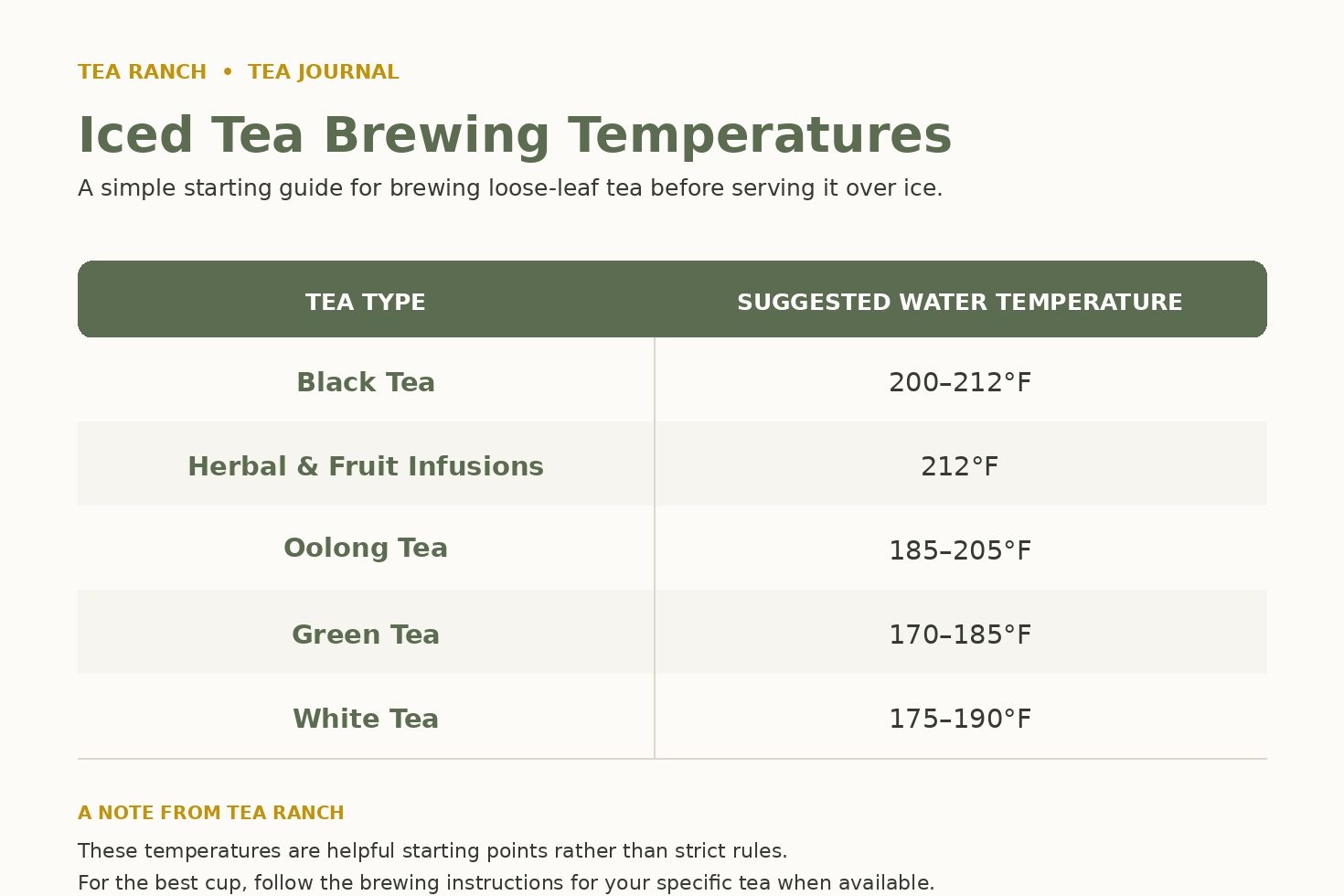
What Water Temperature Should You Use?
Even though your finished drink will be cold, the temperature of the water during brewing still matters.
As a general starting point:
These are guidelines rather than universal rules.
Different teas can perform best at different temperatures, so when your tea includes specific brewing instructions, start there.
This is also a perfect place to internally link to our earlier Tea Journal article, How to Brew the Perfect Cup of Loose-Leaf Tea.
Can You Cold Brew Loose-Leaf Tea?
Yes, and if you've never tried it, summer is an excellent time to experiment.
Instead of extracting the tea with hot water, cold brewing uses cool water and time.
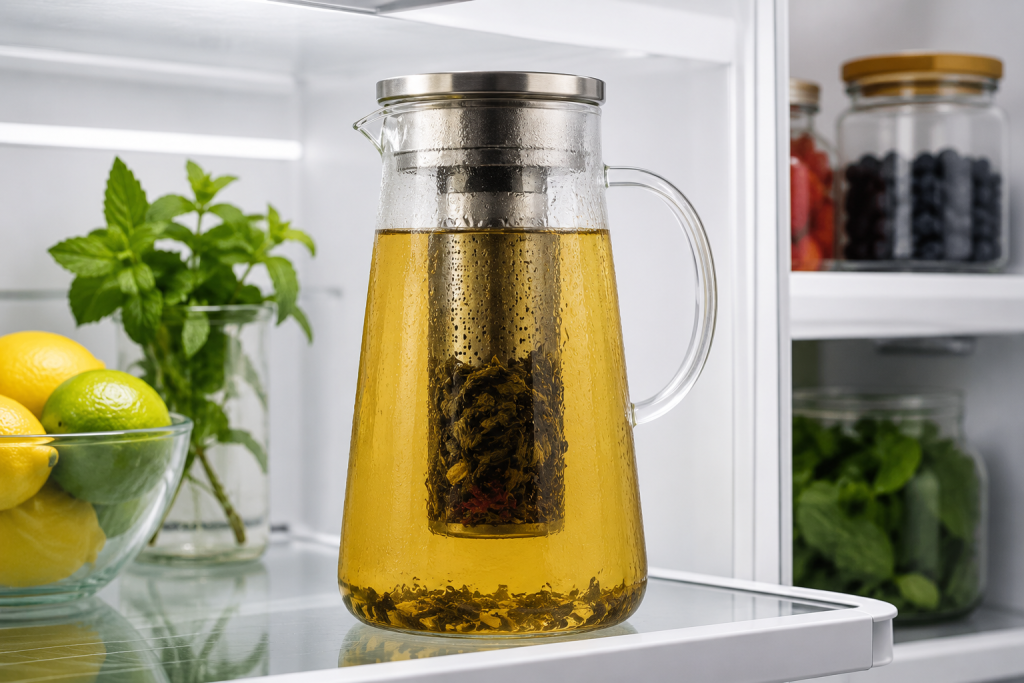
Place loose-leaf tea in a pitcher or jar of cold water, cover it, and refrigerate it for several hours or overnight.
Then strain the leaves.
The result can taste remarkably smooth.
Cold extraction behaves differently from hot brewing, so you may notice that familiar teas taste a little different when prepared this way.
It's also wonderfully convenient.
Put the tea in the refrigerator before bed and tomorrow's iced tea is already waiting for you.
What about sun tea?
While steeping tea in a sunny jar may feel like a summer tradition, food-safety experts recommend a more cautious approach.
For a slow, no-heat brew, we prefer steeping loose-leaf tea safely in the refrigerator instead.
How Much Tea Should You Use for Cold Brew?
A good starting point is approximately 1–2 teaspoons of loose-leaf tea per 8 ounces of water, adjusting for the density of your particular blend and your preferred strength.
For a larger pitcher, simply scale that amount up.
Cold brewing is forgiving, so don't worry about getting it mathematically perfect on your first attempt.
Taste it.
If it's too light, use a little more tea next time.
If it's stronger than you prefer, add water or use fewer leaves in the next batch.
Tea should ultimately taste good to you.
How Long Should You Cold Brew Tea?
Several hours in the refrigerator is generally enough, but the ideal time varies by tea and personal preference.
A practical starting point is 6–12 hours.
Delicate teas may need less time, while some herbal and fruit blends can benefit from a longer infusion.
One of the pleasures of loose leaf is that you can experiment.
Which Teas Make the Best Iced Tea?
There's no single winner, but different teas create very different iced-tea experiences.
Black tea gives you the familiar full-bodied character associated with classic American iced tea.
Add lemon, a little sweetness, or enjoy it straight.
Green tea makes a lighter, fresh-tasting iced tea that's especially nice with citrus or mint.
White tea tends to produce a more delicate cup and pairs beautifully with fruit-forward flavors.
Oolong can be particularly interesting chilled because of its complex floral, fruity, or roasted characteristics.
And then there are fruit and herbal infusions, which are where iced tea gets especially playful.
Hibiscus brings a naturally vibrant color and tart character.
Fruit ingredients can create a juicy, refreshing cup.
Butterfly pea flower brings that extraordinary natural blue, and a squeeze of lemon can transform the color toward purple.
There's no rule saying iced tea has to be brown.
Try a Little Tea Ranch Experiment
If you have several teas at home, here's an easy summer tasting experiment.
Choose two or three blends.
Brew a small amount of each hot and drink a few sips.
Then prepare the same teas over ice.
Notice what changes.
Does the fruit become more noticeable?
Does a floral note become softer?
Does one tea suddenly seem made for summer?
Temperature affects our perception of flavor and aroma, which means a tea you know well can become a surprisingly different experience when chilled.
You might discover a new favorite without buying a new tea at all.
What About Sweet Tea?
We can't discuss iced tea in America without mentioning sweet tea.
If you prefer yours sweetened, add sugar or another sweetener while the tea is still warm so it dissolves easily.
Start modestly. You can always add more.
Fresh fruit can also bring sweetness and flavor without turning the glass into dessert.
Try adding sliced peaches to peach oolong, fresh berries to a hibiscus blend, or mango to a tropical white tea.
And yes, sometimes a proper sweet iced tea is exactly what the afternoon requires.
No judgment from us.
Three Tea Ranch Blends We'd Pour Over Ice
Some teas practically ask for ice.
Smarty Peach is an obvious candidate. Peach and summer already belong together, and the oolong base gives the blend more dimension than a simple fruit drink.
Then there's Sniffin' Sunshine, our mango coconut white tea. Its tropical fruit character makes it a natural warm-weather choice.
And perhaps the most dramatic is Bluetiful Haze.
Serve this caffeine-free butterfly pea flower blend in a clear glass over ice, add a slice of lemon, and watch what happens.
If you've read our Tea Journal article What Is Butterfly Pea Flower Tea?, you'll already know the science behind the surprise.
If you haven't...
We won't spoil all the fun.
Make a Pitcher and Head Outside
Once brewed, keep your iced tea refrigerated until you're ready to enjoy it, and remember to follow common food safety practices.
Perhaps that's the nicest thing about iced tea.
It doesn't require an occasion.
Make a pitcher.
Find a shady spot.
Sit on the porch, balcony, patio, or wherever summer happens to find you.
Listen to whatever is making noise in the trees.
Watch the ice slowly disappear.
Tea doesn't always need to be steaming in a favorite mug to create a quiet moment.
Sometimes mindful moments come with ice cubes.
Happy steeping,
Annika
Founder, Tea Ranch