
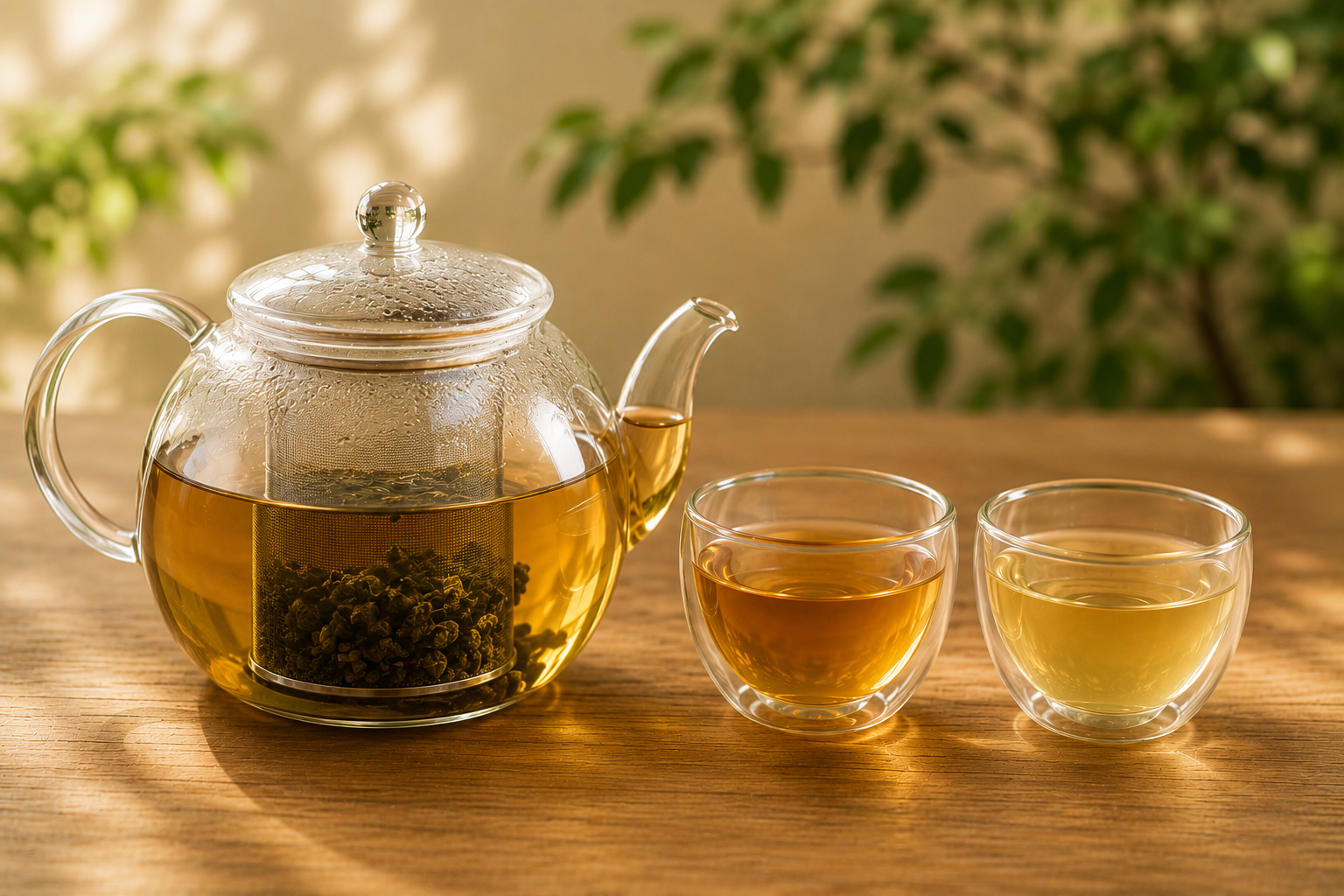
Can You Re-Steep Loose-Leaf Tea? How Many Times Can You Use Tea Leaves?
One of the pleasures of loose-leaf tea is that your first cup doesn't always have to be your last. Here's when you can steep tea leaves again, and why the second cup might surprise you.
You finish your cup of tea and look inside the infuser.
The leaves are still there.
They're larger now, fully hydrated and unfurled, and they certainly don't look finished.
So do you throw them away?
Or add more hot water?
The answer, in many cases, is:
Put the kettle back on.
Many loose-leaf teas can be steeped more than once, and some teas become especially interesting across multiple infusions.
But not every tea re-steeps equally well. Here's what to know before you make cup number two.
Can You Re-Steep Loose-Leaf Tea?
Yes.
Many loose-leaf teas can be infused two or more times, although the number of enjoyable steeps depends on the tea itself, how much leaf you use, and how you brew it.
Traditional teas made from Camellia sinensis—including black, green, white, and particularly oolong teas—are often good candidates for multiple infusions.
With every steep, water extracts compounds from the leaves.
But it doesn't necessarily extract everything at once.
That means another infusion can still contain plenty of flavor and aroma.
And here's where it gets interesting:
The second cup may not taste exactly like the first.
Why Does the Second Steep Taste Different?
Watch loose tea leaves during the first infusion and you'll often see them change dramatically.
Rolled leaves begin opening.
Twisted leaves expand.
Tightly packed leaves unfurl.
Water is making its way into the leaf structure while soluble compounds move from the leaves into your cup.
By the second infusion, the leaves are already hydrated and open.
As a result, your next steep can reveal flavors differently from the first.
Perhaps the second cup seems softer.
A floral aroma becomes more noticeable.
A stronger note retreats and allows something subtler to emerge.
It's one reason tea enthusiasts sometimes think of successive infusions not as copies of the first cup, but as different chapters of the same tea.
How Many Times Can You Steep Loose-Leaf Tea?
There isn't a universal number.
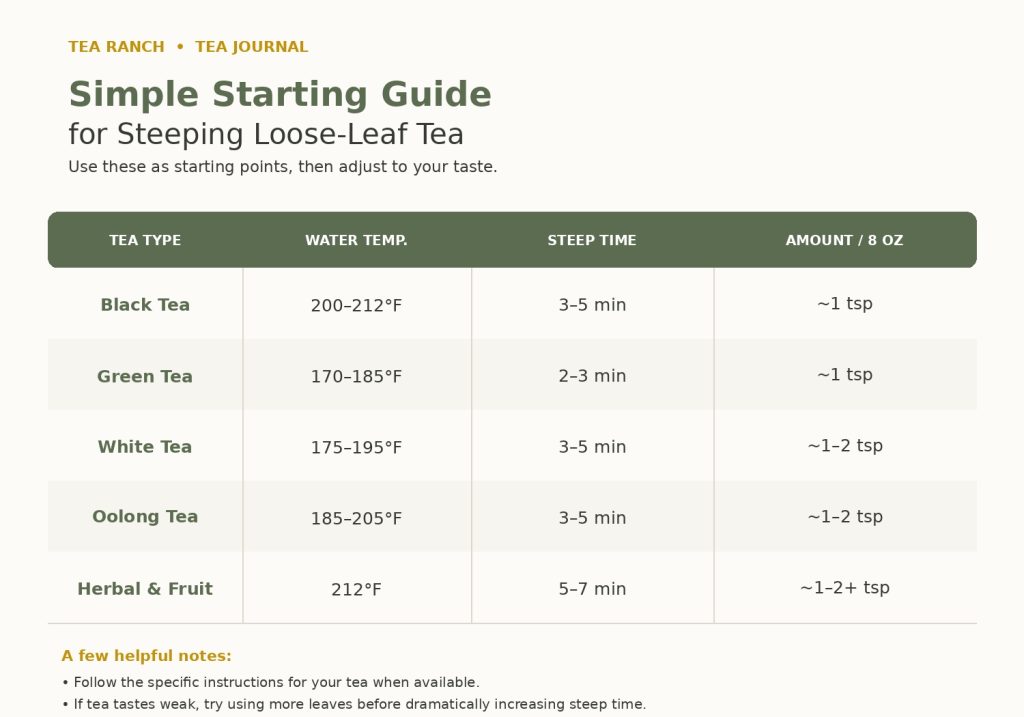
These are general guidelines rather than guarantees.
Some teas will give you one wonderful cup and a disappointing second.
Others can keep going.
The style and quality of the tea, leaf size, brewing method, water temperature, amount of leaf, and steeping time all matter.
And ultimately, there's a remarkably simple test:
Does the next infusion still taste good?
If yes, keep steeping.
Oolong Is Particularly Good for Re-Steeping
If you want to experiment with multiple infusions, oolong is an excellent place to start.
Many oolongs are rolled or twisted during processing, and the leaves continue to open over successive steeps.
The flavor can evolve noticeably from one infusion to the next.
A tea that seems floral in one cup might reveal fruitier, creamier, honeyed, or roasted characteristics later.
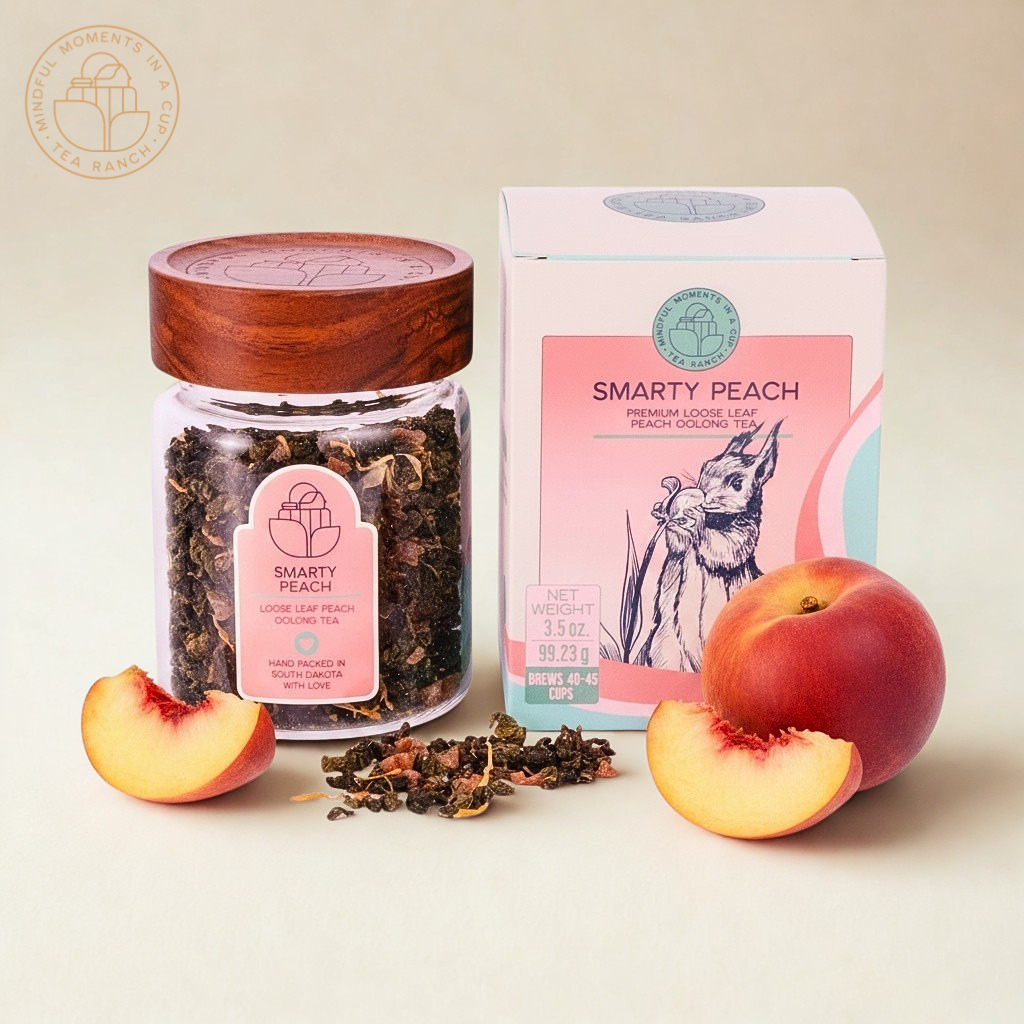
This also makes re-steeping an interesting way to explore Smarty Peach, our peach oolong.
Instead of automatically discarding the leaves after your first cup, give them another infusion and compare.
You may find the peach and tea characteristics present themselves a little differently the second time around.
Can You Re-Steep Black Tea?
Often, yes—but don't necessarily expect as many infusions as you might get from an oolong.
A quality loose-leaf black tea may produce a satisfying second cup, particularly if the first infusion wasn't extremely long.
The second steep is likely to be somewhat lighter.
That isn't necessarily a bad thing.
If you usually add cream or sugar to a robust black tea, you might even try drinking the lighter second infusion plain.
The same leaves can create two rather different tea moments.
Can You Re-Steep Green Tea?
Yes.
Many green teas perform well over multiple infusions.
In fact, repeated steeping is completely normal in many tea traditions.
Because green tea can be sensitive to excessive heat and long brewing times, pay attention to your water temperature rather than simply pouring boiling water over the leaves and hoping for the best.
If your first green tea infusion was pleasant, keep the leaves and try again.
The second steep may be slightly different in sweetness, vegetal character, or astringency.
Can You Re-Steep White Tea?
White tea can also be an excellent candidate for multiple infusions.
The larger leaves found in some white teas may continue giving flavor over several rounds.
This is particularly relevant to Shoumei, the style of white tea used as the base for Tea Ranch's Sniffin' Sunshine Mango Coconut White Tea.
A second steep of a flavored white tea may be lighter than the first, particularly as added flavor components diminish, but the underlying tea can continue to contribute character.
Think of the second infusion as an experiment rather than expecting an exact duplicate.
What About Herbal and Fruit Teas?
This category is much less predictable.
An herbal or fruit blend may contain:
- dried fruit
- flowers
- herbs
- spices
- roots
- peels
- flavor essences
- or a combination of several ingredients
Many of these ingredients release a significant portion of their flavor during the first long infusion.
As a result, a second steep can be noticeably weaker.
But that doesn't mean you shouldn't try. Some blends perform surprisingly well twice.
Others politely inform you that they've already given everything they have.
We respect both approaches.
How Do You Re-Steep Tea Leaves?
It's wonderfully simple.
After finishing the first infusion, remove the leaves from the water rather than leaving them soaking indefinitely.
When you're ready for another cup:
1. Reheat fresh water to an appropriate temperature for the tea.
2. Pour the water over the same leaves.
3. Steep again, generally allowing a little more time if needed.
4. Taste.
You don't necessarily need to dramatically increase the second steeping time.
Start modestly and adjust. If the second infusion seems too light, extend the next one.
Loose-leaf tea gives you room to experiment.
Should You Use Hotter Water for the Second Steep?
Not automatically.
If you're brewing green or white tea, suddenly switching to boiling water may introduce flavors you didn't want simply because you're trying to extract more from the leaves.
It's generally better to begin near the appropriate brewing temperature for that tea and adjust gradually.
Think a little more time before thinking a lot more heat.
How Long Can Wet Tea Leaves Sit Between Steeps?
This deserves some common sense.
Once you've brewed tea, the leaves are no longer a dry, shelf-stable ingredient.
They're wet plant material.
If you're making several cups within the same tea session, simply keep your leaves in the infuser or teapot between steeps and continue relatively soon.
I would not recommend leaving wet tea leaves sitting around at room temperature for many hours or saving yesterday's damp leaves for tomorrow's breakfast.
If you're finished drinking tea for the day, discard or compost them.
Fresh tea tomorrow is a much better plan.
Is Re-Steeping Loose-Leaf Tea More Economical?
It certainly can be.
Suppose one portion of loose-leaf tea produces two enjoyable cups rather than one.
You're getting more tea from the same leaves.
But I wouldn't turn this into a promise that every jar of loose leaf automatically produces twice as many servings.
Some teas re-steep beautifully. Some don't.
Some people prefer the first infusion enough that they simply make a fresh one every time.
The better reason to re-steep isn't squeezing every possible penny out of your tea.
It's discovering what else the leaves can do. The extra cup is a rather nice bonus.
Re-Steeping Also Means a Little Less Waste
There's something satisfying about using an ingredient fully before discarding it.
Loose-leaf tea already avoids the individual wrappers, strings, tags, and disposable bags associated with many conventional tea bags.
Re-steeping can take that idea one small step further.
One portion of leaves. Another cup. No additional packaging required.
And once the leaves truly are finished, some tea leaves may be suitable for composting depending on what is in the blend and your composting setup.
Small things, perhaps. But small things add up.
A Simple Tea Tasting Experiment
The next time you brew a traditional loose-leaf tea, don't discard the leaves.
Instead, make two cups.
For the first infusion, follow your normal brewing instructions. Set aside a few sips.
Then use the same leaves for a second infusion and taste the two side by side.
Don't worry about finding sophisticated tasting notes.
Ask simpler questions.
Is the second cup lighter?
Sweeter?
More floral?
Less bitter?
Does one aroma stand out more?
Which cup do you prefer?
There is no correct answer.
You're simply paying attention.
And paying attention is one of the nicest things tea invites us to do.
Loose Leaf Has More to Say
One of our favorite things about loose-leaf tea is that the leaves remain visible throughout the experience.
You see them dry. You watch them expand. You smell them after brewing.
And sometimes, when you think they're finished, they have another cup left in them.
So the next time you lift your infuser out of the mug, don't be too quick to empty it.
Pour yourself another cup.
See what changed.
The second steep might just be your favorite.
Happy steeping,
Annika
Founder, Tea Ranch