
Does Tea Have Caffeine? A Simple Guide to Caffeine in Different Types of Tea.
Black, green, white, oolong, herbal... which teas contain caffeine, and which don't? Here's a simple way to make sense of what's in your cup.
Does tea have caffeine?
The short answer is yes, sometimes.
The longer answer is much more interesting.
Black tea contains caffeine.
So does green tea.
White tea does too, despite its delicate reputation.
Oolong falls into the caffeinated camp as well.
But then there are the drinks we commonly call "tea" that aren't technically tea at all, and many of those are naturally caffeine-free.
Confused yet?
Don't be. Once you understand one simple distinction, figuring out which teas contain caffeine becomes much easier.
It Starts With the Tea Plant
Black tea, green tea, white tea, and oolong tea may look and taste remarkably different, but they all have something important in common.
They come from the tea plant, Camellia sinensis.
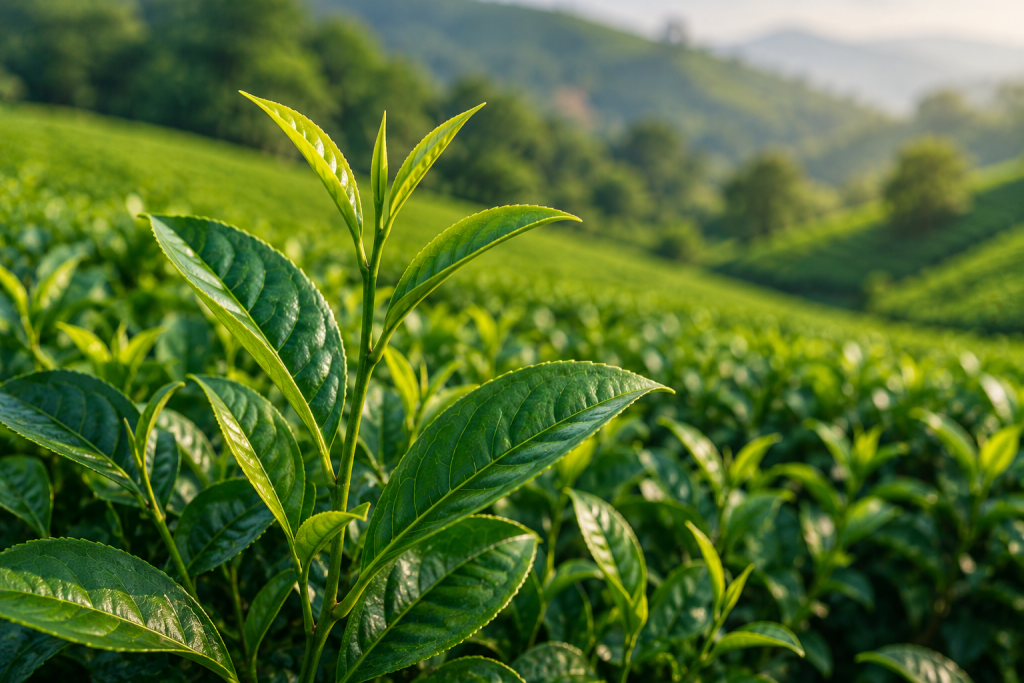
And Camellia sinensis naturally contains caffeine.
The differences among these teas come largely from how the leaves are harvested and processed.
Oxidation, rolling, drying, and other processing choices help create the wide range of flavors and characteristics we associate with different tea styles.
But whether those leaves eventually become a delicate white tea, grassy green tea, complex oolong, or robust black tea, they began with the same remarkable plant.
So here's the easiest rule to remember:
If it's made with leaves from Camellia sinensis, it naturally contains caffeine.
Which Types of Tea Have Caffeine?
Here's the basic breakdown:
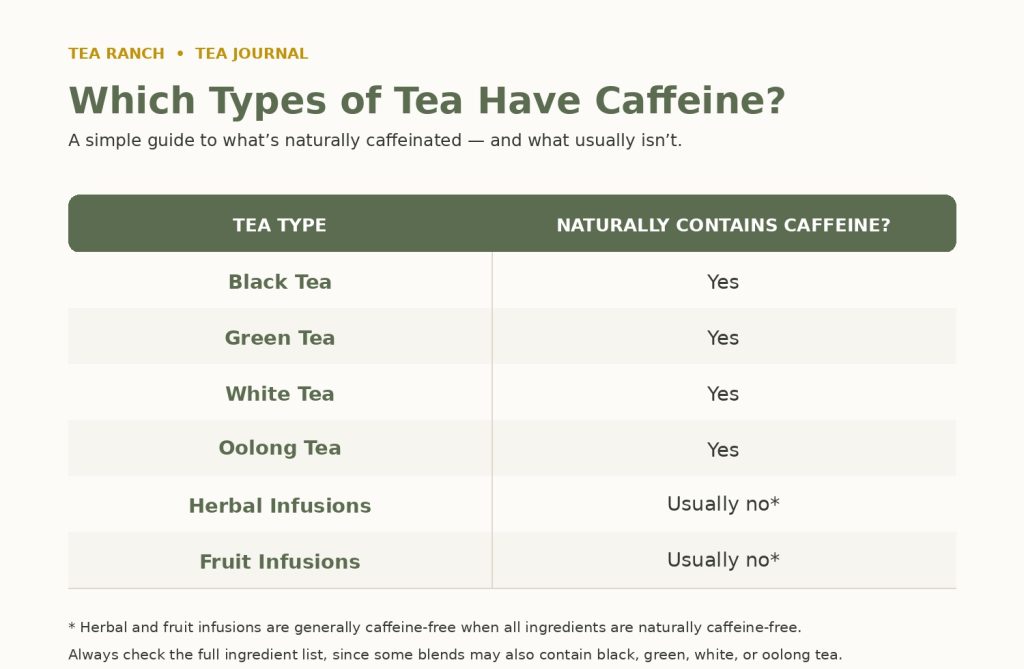
The asterisk matters.
Herbal and fruit infusions are generally caffeine-free when their ingredients themselves don't contain caffeine.
But blends can contain many different ingredients, so it's always worth checking the label.
More on that in a moment.
While black, green, white, and oolong teas all naturally contain caffeine, the amount in your cup can vary considerably.
Black tea often contains more caffeine than green tea, but tea type alone doesn’t determine caffeine content.
The variety and age of the leaves, growing and processing conditions, how much tea you use, water temperature, and steeping time can all affect the final amount.
Even white tea, which is sometimes assumed to be very low in caffeine, can contain a meaningful amount.
Rather than relying on tea color or type alone, it’s best to think of caffeine levels as a range rather than a fixed number.
Does Black Tea Have Caffeine?
Yes.
Black tea is made from Camellia sinensis, so it naturally contains caffeine.
Because black tea often has a bold flavor, it's a popular morning choice for people who enjoy starting the day with something robust.
It's also delicious with milk or cream and a little sweetness—which is exactly how some of us think a rich black tea should occasionally be enjoyed.
At Tea Ranch, our Rise & Roar Caramel Vanilla Black Tea falls into this category.
The bear on the package may look ready for the day.
Now you know his tea is, too.
Does Green Tea Have Caffeine?
Yes, green tea contains caffeine.
This sometimes surprises people because green tea tends to taste lighter and more delicate than many black teas.
But flavor strength doesn't tell you whether a tea contains caffeine.
Green tea is still produced from Camellia sinensis, and caffeine occurs naturally in the plant.
So our jasmine green tea, Hoo Harmony, isn't caffeine-free simply because its flavor and personality are gentler than a bold black tea.
The owl may be peaceful.
The leaves still contain caffeine.
Does White Tea Have Caffeine?
Here's one of the tea world's persistent misconceptions:
White tea is not naturally caffeine-free.
White tea is also made from Camellia sinensis.
Its delicate appearance and gentle processing sometimes lead people to assume it contains little or no caffeine, but caffeine content is more complicated than the color of the finished tea.
The part of the plant harvested, growing conditions, cultivar, processing, how much tea you use, water temperature, and brewing time can all influence how much caffeine ultimately ends up in your cup.
So while you may encounter broad estimates comparing white tea with black or green tea, it's better not to assume that every white tea contains less caffeine than every other type of tea.
Our Sniffin' Sunshine Mango Coconut White Tea, for example, should be considered a caffeinated tea because it contains white tea.
What About Oolong Tea?
Oolong tea contains caffeine, too.
Again, the reason is simple: oolong comes from the same tea plant.
What makes oolong particularly fascinating is the enormous range of styles within the category.
Depending on how it is produced, an oolong can be floral and delicate, rich and roasted, fruity, creamy, or somewhere in between.
Our Smarty Peach pairs oolong tea with a juicy peach profile.
So while the peach might make the blend taste wonderfully fruity, the oolong tea base means it does contain caffeine.
What Is Herbal Tea, Then?
Here's where the terminology gets a little loose.
Peppermint tea. Chamomile tea. Hibiscus tea. Butterfly pea flower tea.
We call all of these "tea" in everyday conversation.
Botanically speaking, however, they aren't true teas because they aren't made from Camellia sinensis.
They're more accurately called herbal infusions or tisanes.
They're made by steeping flowers, herbs, fruits, spices, roots, or other botanicals in water.
And because they don't automatically contain the tea plant, many are naturally caffeine-free.
Which Teas Are Naturally Caffeine-Free?
If you'd prefer to avoid caffeine, herbal and fruit infusions can be excellent choices.
For example, hibiscus itself doesn't contain caffeine.
Neither does butterfly pea flower.
That means blends made entirely from caffeine-free fruits, flowers, herbs, and botanicals can offer plenty of flavor and color without relying on traditional tea leaves.
At Tea Ranch, that makes colorful blends such as Snuggle Bunny Strawberry Hibiscus and Bluetiful Haze options for customers looking for a caffeine-free cup.
That can be particularly nice later in the day, or simply for anyone who prefers not to consume caffeine.
Why You Should Still Read the Ingredient List
Here's an important lesson whenever you're shopping for tea:
Don't judge caffeine content by the name on the front of the package alone.
A blend called "Blueberry Hibiscus," for example, might consist entirely of fruit and flowers and be caffeine-free.
Another hibiscus blend could contain black tea and therefore contain caffeine.
Likewise, adding fruit, flowers, spices, or flavoring to a green or black tea doesn't remove the caffeine naturally present in the tea leaves.
The ingredient list tells you what you're actually brewing.
At Tea Ranch, we also identify the caffeine status of our blends so you don't have to solve a botanical mystery every time you want a cup.
Does Steeping Time Affect Caffeine?
Brewing does matter.
Caffeine is water-soluble, so it is extracted from tea leaves as they steep.
Several variables can affect caffeine extraction, including water temperature, steeping time, the amount of tea used, leaf characteristics, and the ratio of tea to water.
That's another reason exact statements such as "green tea has X milligrams and black tea has Y" can be misleading unless you're talking about a particular product prepared under specific conditions.
Your actual cup isn't brewed in a laboratory.
And that's okay.
For everyday tea drinking, knowing whether a blend is caffeinated or caffeine-free is usually much more useful than trying to predict an exact number.
Can You Remove Caffeine by Steeping Tea Briefly and Throwing Away the Water?
You may have heard this trick:
Steep caffeinated tea for 30 seconds, discard the water, then brew the leaves again.
Supposedly, most of the caffeine disappears with the first infusion.
Unfortunately, it's not that simple.
Caffeine extraction happens throughout steeping rather than conveniently leaving the leaves all at once during the first few seconds.
If avoiding caffeine is important to you, choose a naturally caffeine-free herbal or fruit infusion or a properly decaffeinated tea instead of relying on a quick rinse.
Caffeine-Free Isn't the Same as Decaffeinated
These two terms are easy to confuse.
Naturally caffeine-free means the ingredients don't naturally contain caffeine in the first place.
A pure hibiscus or butterfly pea flower infusion, for example, doesn't need to have caffeine removed.
Decaffeinated tea, on the other hand, begins with caffeinated tea leaves and undergoes processing to remove most of their caffeine.
Even decaffeinated tea may retain small amounts.
So if you're shopping specifically because you want to avoid caffeine, knowing the difference is useful.
Choosing the Right Tea for Your Moment
One of the pleasures of having different types of tea on the shelf is being able to choose according to the moment.
Maybe your morning calls for a bold black tea.
Perhaps the afternoon belongs to jasmine green tea or peach oolong.
And when evening arrives, you might reach for a colorful caffeine-free fruit or flower infusion.
There doesn't need to be a complicated rule.
Knowing what's in your tea simply gives you more freedom to choose what works for you.
And perhaps that's the nicest way to think about caffeine in tea.
It isn't about deciding which type is "best."
It's about finding the right cup for right now.
At Tea Ranch, we're rather fond of having options.
Happy steeping,
Annika
Founder, Tea Ranch