
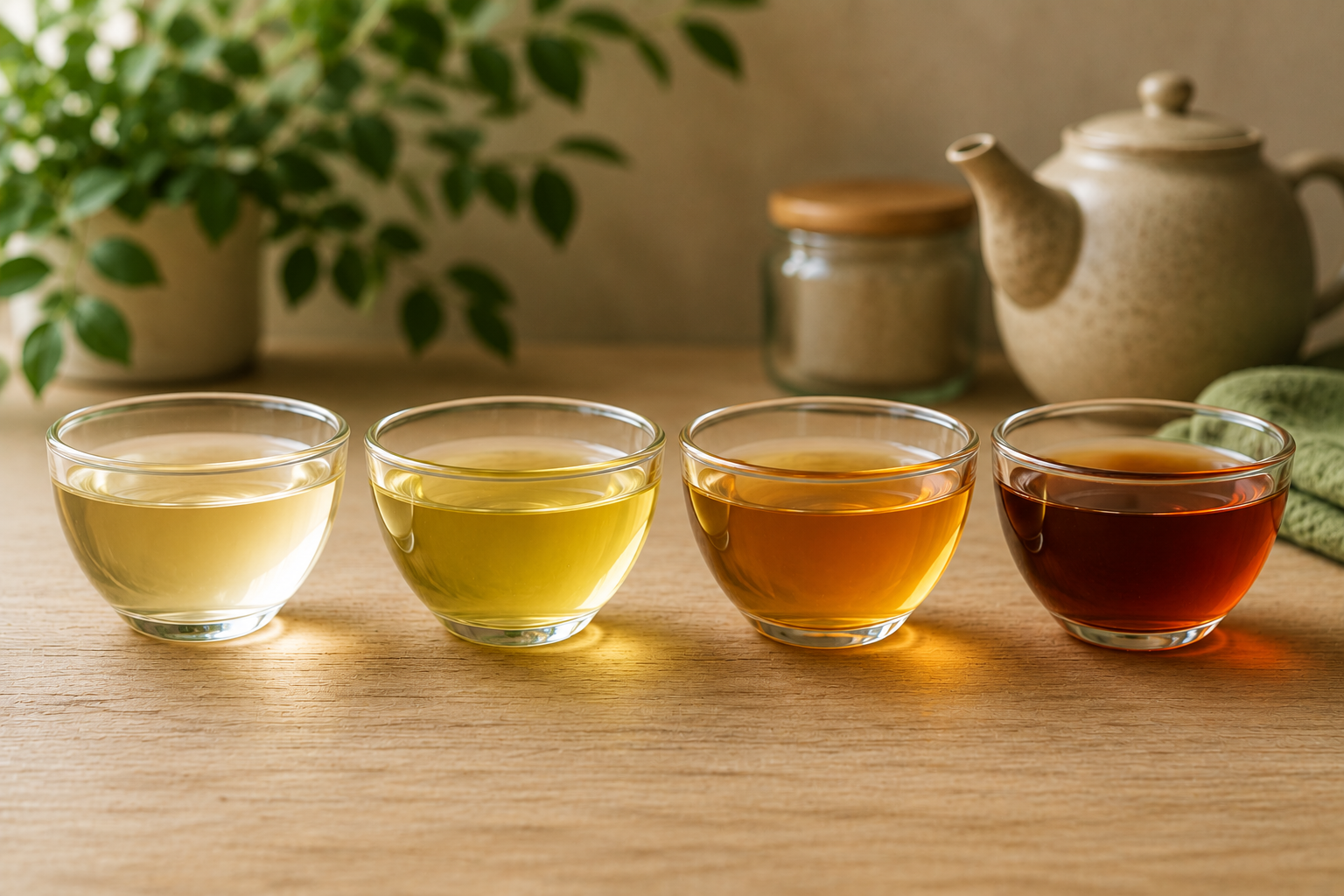
Black vs. Green vs. White vs. Oolong Tea: What’s the Difference?
They all come from the same plant, but they can look, taste, and brew remarkably differently. Here’s a simple guide to the four major types of tea.
Black tea is bold.
Green tea can be fresh and delicate.
White tea is often soft and subtle.
Oolong might be floral, fruity, roasted, or somewhere in between.
With such different personalities, it would be reasonable to assume these teas come from entirely different plants.
They don't.
Black, green, white, and oolong tea all come from the same tea plant: Camellia sinensis.
So how does one plant become so many different kinds of tea?
That's where things get interesting.
One Remarkable Plant, Many Different Teas
Walk through a tea garden and you won't find one field growing "black tea plants" and another filled with "green tea plants."
At the heart of traditional tea is Camellia sinensis, an evergreen plant whose leaves and buds have been used to make tea for centuries.
What happens after those leaves are harvested plays an enormous role in determining what kind of tea they become.
Tea makers can wither, roll, heat, oxidize, dry, and otherwise process the leaves in different ways.
Those choices influence the tea's color, aroma, flavor, and character.
It's one of the things we find so fascinating about tea.
One plant.
Remarkably different results.
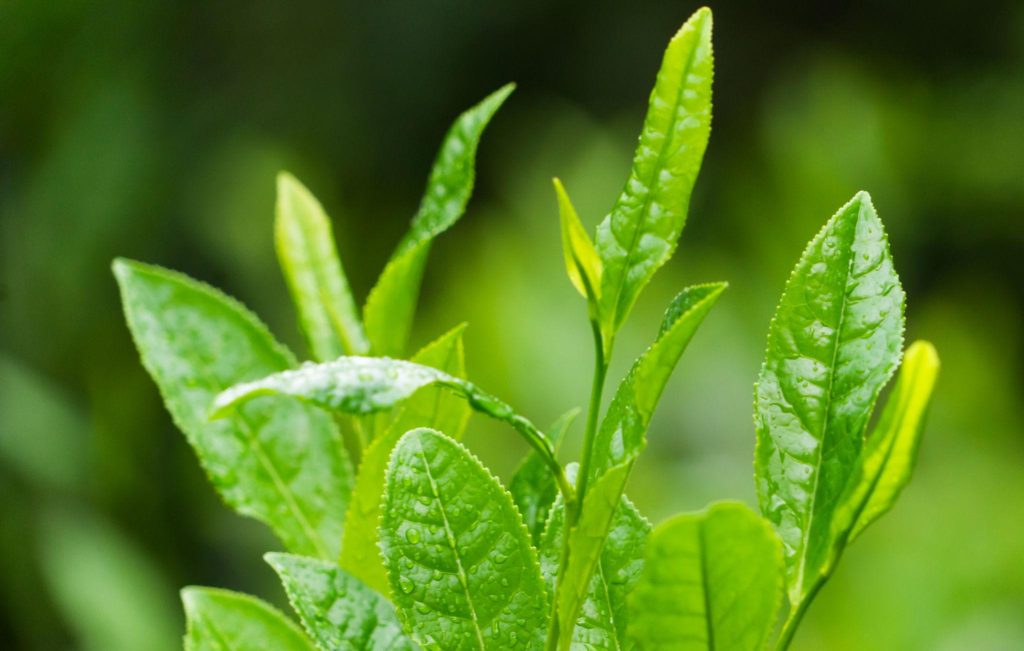
What Is Oxidation in Tea?
To understand the difference between the major tea types, it helps to understand one word:
Oxidation.
After tea leaves are picked, enzymes in the leaves begin reacting with oxygen.
If you've ever sliced an apple and watched the exposed flesh gradually turn brown, you've seen oxidation in action.
Something related happens with tea leaves.
Tea makers carefully control how much oxidation occurs during processing.
Generally speaking, greater oxidation contributes to darker leaves and different flavor characteristics.
This is one of the biggest distinctions among green, oolong, and black teas.
But processing is much more nuanced than simply choosing an oxidation percentage.
Cultivar, growing conditions, harvest, leaf selection, shaping, heating, drying, and the skill of the tea maker all influence the finished cup.
Tea is wonderfully reluctant to fit into overly simple boxes.
Still, oxidation gives us a useful place to begin.
Black Tea
Black tea undergoes substantial oxidation during processing.
The leaves darken, and the finished infusion can range from amber to deep reddish brown.
What does black tea taste like?
There's no single "black tea flavor."
Depending on its origin and production, black tea can have notes that seem:
malty • brisk • fruity • floral • earthy • honey-like • rich
Its fuller character also makes black tea particularly well suited to added flavors and ingredients.
That's why you'll find it at the heart of classics such as Earl Grey as well as dessert-inspired blends.
At Tea Ranch, Rise & Roar combines black tea with caramel and vanilla notes for a richer, comforting cup.
And yes, this is also the tea with the bear.
We couldn't give a tea called Rise & Roar to a particularly timid animal.
Does black tea have caffeine?
Yes.
Because black tea comes from Camellia sinensis, it naturally contains caffeine.
But don't assume every black tea contains exactly the same amount—or that black tea will always contain more caffeine than every green, white, or oolong tea.
As we explored in our guide to caffeine in tea, caffeine levels vary according to the leaves themselves and how the tea is prepared.
Green Tea
Green tea follows a different path.
After harvesting, heat is applied relatively early in processing to deactivate the enzymes responsible for oxidation.
This helps preserve characteristics associated with the fresh leaf and contributes to the familiar green appearance of many finished green teas.
Different traditions use different methods.
Chinese green teas are often heated in pans or similar equipment, while many Japanese green teas are steamed.
And those processing choices matter.
What does green tea taste like?
Depending on the tea, you might encounter flavors described as:
grassy • vegetal • nutty • sweet • marine • floral • fresh
If your only experience with green tea has been a bitter cup, don't assume that's simply what green tea tastes like.
The culprit may have been the brewing.
Green tea is often happier with cooler water and a shorter steep than black tea.
Boiling water and an enthusiastic ten-minute steep can turn an otherwise lovely green tea into something considerably less friendly.
What about jasmine green tea?
Jasmine tea provides a beautiful example of tea and flowers working together.
Traditionally, tea leaves are scented with jasmine blossoms, allowing the tea to absorb their aroma.
Our Hoo Harmony Jasmine Green Tea combines that floral jasmine character with green tea for a lighter, aromatic cup.
And because the base is green tea, it does contain caffeine.
The owl may look serene.
He isn't decaf.
White Tea
White tea sometimes gets described simply as "the least processed tea."
That's a useful shorthand, although—as usual with tea—the full story is more nuanced.
White tea generally undergoes relatively minimal manipulation after harvest, with withering and drying playing central roles in its production.
Young buds and leaves are commonly associated with many white teas, although harvesting standards vary by style.
What does white tea taste like?
White tea is often more delicate in character than a robust black tea.
Depending on the tea, you might notice qualities that seem:
soft • floral • fruity • honey-like • hay-like • delicate
Its subtle nature also makes white tea an interesting base for fruit flavors.
Tea Ranch's Sniffin' Sunshine pairs Shoumei white tea with mango and coconut for a tropical interpretation of white tea.
It's a particularly lovely tea served over ice.
Is white tea caffeine-free?
No.
This misconception deserves repeating because it's surprisingly common.
White tea naturally contains caffeine.
White tea comes from Camellia sinensis, just like black, green, and oolong tea.
Its pale color and delicate flavor don't make it caffeine-free.
Oolong Tea
And then we arrive at perhaps the most difficult category to summarize in a few sentences.
Oolong.
Oolong teas are partially oxidized and encompass an enormous spectrum of styles.
Some are light, green, and intensely floral.
Others are darker, roasted, rich, and complex.
If black and green tea seem like opposite ends of a spectrum, it's tempting to describe oolong simply as the tea "in between."
That's not entirely wrong.
But it doesn't really do oolong justice.
What does oolong tea taste like?
Depending on how it's produced, an oolong might suggest:
orchids • stone fruit • honey • cream • toasted grain • nuts • roasted notes
That's quite a range.
And it's part of what makes exploring oolong so enjoyable.
Our Smarty Peach pairs oolong tea with peach, bringing together the tea's character with a familiar fruit flavor.
For someone who has mostly explored black or green teas, a flavored oolong can be a very approachable introduction to the category.
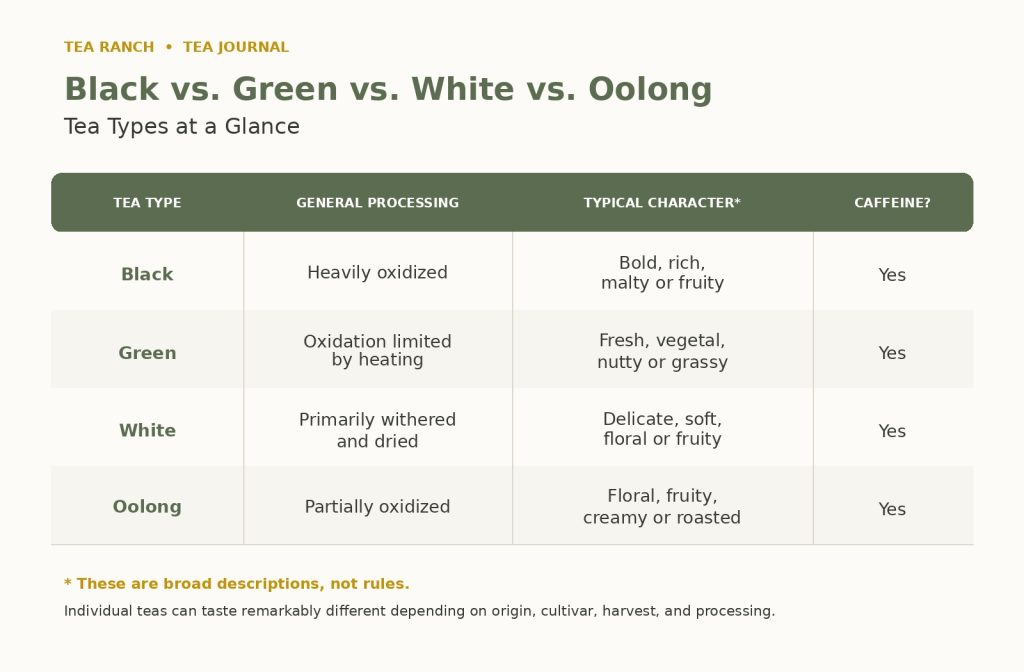
So Which Type of Tea Is Best?
We have excellent news. You don't have to choose. There is no objectively "best" type of tea.
If you enjoy bold flavors and perhaps a splash of milk or cream, you may gravitate toward black tea.
If you like fresher or more vegetal flavors, explore green tea.
If subtle and delicate sounds appealing, try white tea.
If you're curious about complex flavors and want an enormous category to explore, oolong can keep you occupied for quite some time.
And if none of those sound right?
There are still herbal and fruit infusions.
Tea is wonderfully accommodating that way.
Wait—Where Do Herbal Teas Fit In?
They don't. At least not botanically.
Hibiscus, chamomile, peppermint, rooibos, and butterfly pea flower don't come from Camellia sinensis.
Drinks made by steeping these ingredients are technically herbal infusions or tisanes, even though we commonly call them herbal teas.
That distinction also explains why many herbal infusions are naturally caffeine-free.
Traditional tea leaves naturally contain caffeine.
Many herbs, fruits, and flowers don't.
If you'd like to explore one particularly colorful example, our Tea Journal guides to hibiscus tea and butterfly pea flower tea venture beyond Camellia sinensis into the botanical side of the teacup.
The Best Way to Learn About Tea Is to Taste It
You can read descriptions of tea all afternoon. Eventually, though, you'll need a kettle.
One of the simplest ways to understand the differences is to taste different tea types side by side.
Try a black tea.
Then a green.
Then white or oolong.
Before adding milk, sugar, lemon, or anything else, take a sip on its own.
Notice the color.
Smell the tea.
Pay attention to how it feels in your mouth.
What do you taste first?
What remains after you swallow?
And most importantly:
Do you like it?
You don't need the "correct" tasting vocabulary.
If a sophisticated tea description tells you that you should detect spring orchids, toasted chestnuts, and morning mist on a distant mountain, but you taste something that reminds you of peaches—
We'll take peaches.
Your cup. Your taste buds.
A Whole World From One Leaf
Perhaps that's what makes Camellia sinensis so remarkable.
The same species of plant can become a delicate white tea, a fresh green tea, a fragrant oolong, or a rich black tea.
Then tea makers and blenders can take those foundations even further, adding flowers, fruits, spices, and flavors to create something entirely new.
A single plant has given the world centuries of tea traditions and an almost ridiculous number of ways to fill a cup.
Which means there will always be something else to try.
We consider that very good news.
Happy steeping,
Annika
Founder, Tea Ranch